GPS Tracker - Family Locator
- 3.8
- Rating
- 1.00M
- Installs
- Free
- Price
 Analysis by App-foxy
I approached GPS Tracker - Family Locator as a practical safety tool rather than another general-purpose map. Its focus is straightforward: helping families follow locations, review movement history, and react quickly through SOS alerts. That narrow purpose is useful because it keeps the app centered on situations where knowing someone’s location matters, but it also means the experience depends heavily on how comfortably everyone in the family agrees to use it.
The app is free to download, is listed for everyone, and comes from Esame Marketing Limited. It sits in the Maps & Navigation category, although I would judge it less like a route-planning app and more like a family coordination service. The current release is version 1.0.5, and the app supports devices running Android 7.0 or later. It has passed the half-million-install mark, which suggests that the idea has reached a meaningful audience even though its displayed average rating is currently 0.0.
How GPS Tracker - Family Locator fits into everyday family safety
The most convincing use case is a family that wants a simple way to check whether someone has reached a destination without repeatedly calling or messaging. A parent could use it to keep an eye on a child travelling home, while partners or adult relatives might use it during a long commute, a walk, or a day spent in an unfamiliar area. I can also see value for families caring for an older relative, provided that person understands the arrangement and is comfortable with location sharing.
You May Also Like

 Blood Strike: 2.5 Anniversary
Blood Strike’s Loadouts Turn Every Drop Into a Tactical Gamble
A close look at Blood Strike’s custom loadouts: how fast access to signature weapons reshapes its battle royale rhythm, rewards preparation, and narrows the gap between fights.

 Pandora - Music & Podcasts
Pandora’s Music Is Easy to Start, but Harder to Recover
Pandora’s strength is its low-effort path from a seed to a station. Its weak spot is how much confidence it asks you to place in connection, setup, and quiet recovery.

 8 Ball Pool
 Is Built on Rivalries, Rematches, and Routine
A close look at the rivalries, rematches, shared routines, and unanswered safety questions that turn a quick pool match into a persistent mobile community.

 Samsung Music
’s Quiet Strength Is Playing What You Already Own
Its reach comes less from spectacle than from dependable access to a personal library. That simplicity is both the app’s strongest retention engine and its ceiling.

 AccuWeather: Weather Radar
AccuWeather Review: A Quick, Clear Forecast for Everyday Decisions
For everyday plans, the best forecast is the one you can understand quickly. AccuWeather makes rain timing, radar, and local conditions easy to act on, with a few trade-offs.

 Hill Climb Racing
Why Hill Climb Racing Still Turns Crashes Into One More Run
A tiny car, a bumpy hill and one more upgrade: Hill Climb Racing keeps resurfacing because its simple chaos makes every near-miss feel personal.
More From Our News Desk



That last condition matters. Location tracking is not just a technical feature; it is a relationship decision. I would explain who can see the information, when it is appropriate to check it, and what an SOS alert should mean before relying on the app. Used openly, it can reduce anxious calls. Used secretly or constantly, it can create distrust and turn a safety feature into a source of pressure.
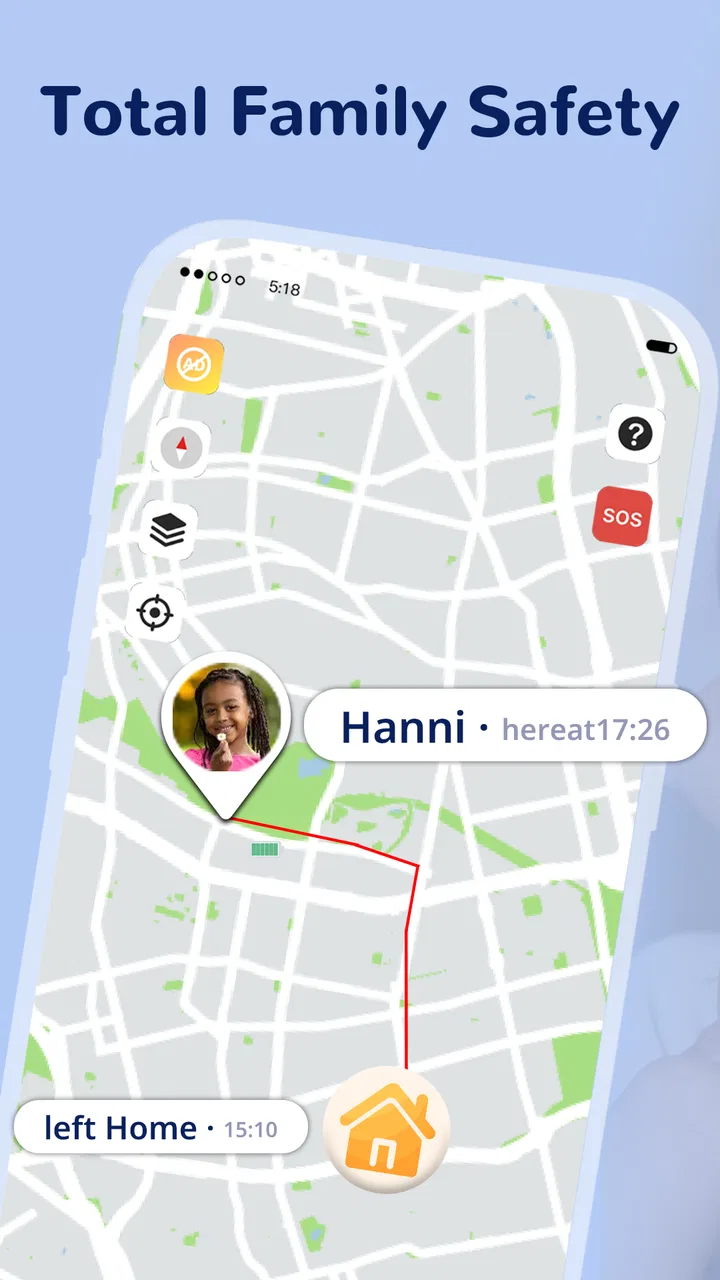
The three main functions work together in a sensible way. GPS tracking is intended for a current view of a family member’s whereabouts, SOS alerts are designed for urgent situations, and location history adds context by showing where a device has been. In practice, the history function may be more useful than people first expect. A current position can answer “where are they now?”, while a past trail can help explain a missed meeting, a delayed arrival, or the last known movement after someone stops responding.
I would not treat the app as a replacement for emergency services. An SOS button can help notify the people who matter, but it does not automatically guarantee rescue, medical assistance, or a response from authorities. A family should agree on what happens after an alert: who checks the phone, who calls the person, and who contacts emergency services if the situation appears serious.
The current experience and its practical strengths
What makes this app appealing is its direct purpose. Many mapping products are built around driving directions, public transport, saved places, or business discovery. GPS Tracker - Family Locator instead puts the family relationship at the center. If your main question is whether a particular person is safe or has arrived, a dedicated tracker can feel more relevant than opening a large map application and trying to assemble the same information manually.
The location-history concept also supports a calmer workflow. Rather than sending several “Where are you?” messages, I would first check the recent movement record, then contact the person only if something looks unusual. That can be especially helpful when a phone is temporarily out of reach or a family member is busy. It is not a substitute for conversation, but it can give a useful starting point.
There is a subtle trade-off here: more history can mean more reassurance, but it can also encourage unnecessary checking. I recommend agreeing on a reasonable purpose before turning tracking into a daily habit. For example, use it during school travel or a trip, then stop sharing when the situation no longer calls for it. This keeps the app tied to safety rather than surveillance.
The SOS function deserves similar thought. I would show every intended user how to trigger it before an emergency occurs, and I would make sure the family knows what an accidental alert looks like and how to respond. A feature that nobody has practised may be difficult to use under stress. The best setup is not necessarily the one with the most people watching; it is the one where the right people understand the alert and are ready to act.
What the current release tells me about the product
Version 1.0.5 places the app at an early point in its product life. That does not automatically make it unreliable, but it does affect how I would approach it. A newer app can still have a clear core idea while its workflows, explanations, and edge-case handling continue to mature. I would install it first on a spare or secondary device, test the family setup in a normal situation, and only then decide whether it belongs in a critical safety routine.
The release date is March 9, 2026, so the app’s development story is still relatively fresh. I would watch future releases for improvements that make tracking easier to understand rather than simply adding more controls. In this category, the most valuable progress is often practical: clearer alert handling, better explanations of location history, easier family setup, and dependable behaviour when a phone moves between networks or temporarily loses a signal.
Because the visible average rating is 0.0, I would not use the rating as evidence that the app is either excellent or poor. It simply does not give me a useful quality signal at this stage. The install count shows that many people have obtained it, but downloads alone cannot tell me whether families found the tracking accurate, the alerts dependable, or the interface comfortable. I would therefore make the first test with low stakes instead of assuming the app is ready for every situation.
There is also a financial detail worth keeping in mind. The app is free, but in-app purchases range from $2.99 to $9.99 per item. I would check the available options before inviting the whole family or building a long-term routine around the service. A free starting point is attractive, but a family should understand which parts of its intended workflow may involve an additional purchase. That is especially important when several people may need access.
How existing users can get more from it
If you already use GPS Tracker - Family Locator, my first recommendation is to define a small tracking group instead of adding everyone you know. A focused group makes the map and history easier to interpret and reduces the chance that an SOS alert reaches people who do not know what to do. The app is most useful when each person included has a clear role.
My second recommendation is to test the complete chain, not just the map. Have one person move through an ordinary journey, check whether the location appears as expected, review the history afterward, and send a test alert only when everyone is prepared for it. This reveals practical friction that a quick installation cannot show. It also helps family members learn where to look before a real concern arises.
A third useful habit is to treat location history as supporting evidence rather than a perfect record of every second. Phones can be indoors, underground, low on power, or temporarily disconnected. I would avoid making a serious decision from one apparently frozen position. Compare the last known location with the person’s planned route and try calling them. The app can shorten the process of checking, but common sense still has to lead.
For school-age children, I would use the app around specific transitions, such as leaving school or arriving home, rather than presenting continuous monitoring as the only way to stay safe. For an older relative, I would focus on whether the person can recognise an SOS situation and use the phone comfortably. The right setup changes with the user. A feature that feels reassuring to one person may feel confusing or intrusive to another.
Another overlooked point is battery planning. Any location-based routine depends on the tracked phone remaining usable. I would charge the device before a long journey, avoid assuming that a nearly empty battery will support reliable monitoring, and keep a backup contact plan. This is not a criticism unique to this app; it is a basic limitation of phone-based tracking that families often remember only after something goes wrong.
Where it differs from ordinary map and messaging alternatives
A standard maps app is usually better when I need directions, traffic information, or a route to a new place. A messaging app is usually better when I need a quick conversation or a temporary location share with one person. GPS Tracker - Family Locator makes more sense when the recurring need is family-oriented tracking combined with an SOS workflow and a record of previous locations.
The advantage of a dedicated tool is focus. I do not have to mix family safety checks with restaurant searches, navigation instructions, or unrelated conversations. The disadvantage is that it adds another app for everyone to install, understand, and keep available. If your family already has a trusted location-sharing arrangement inside another service and it covers alerts and history well enough, moving to this app may not provide enough benefit to justify the change.
I would also choose a conventional messaging solution when the need is occasional. If a friend only wants to tell me they have arrived at a concert, a one-time message is simpler and less intrusive. I would choose a dedicated family tracker when the situation repeats, when several relatives need a shared view, or when an SOS process is important enough to practise in advance.
In other words, this is not automatically the best navigation download just because it uses GPS. Its value comes from the family-safety workflow. People looking for turn-by-turn guidance, detailed travel planning, or a broad map database should look elsewhere. People who want a focused way to coordinate location checks may find the narrower design more comfortable.
Limitations I would consider before relying on it
The biggest limitation is the gap between a location shown on a screen and a real safety guarantee. A map marker cannot confirm how a person feels, whether they need medical help, or whether the device is in the right hands. I would never let the presence of tracking replace a phone call, a prearranged check-in, or emergency assistance when circumstances demand it.
The second limitation is adoption. Everyone who needs to be tracked has to participate in a way that makes the system useful. A family member who disables location access, leaves the phone behind, or does not understand the alert process can create false reassurance. Before choosing this app, ask whether the people involved are willing and able to keep using it consistently.
Privacy is another genuine concern. Location history can reveal routines, regular destinations, and periods when someone is away from home. I would discuss access openly, avoid sharing an account casually, and remove people from the tracking group when they no longer need access. The app may be suitable for family coordination, but that does not mean every family member should see every detail forever.
The purchase model may also affect expectations. Since optional items cost between $2.99 and $9.99, I would not promise relatives that every planned capability is included in the free experience until I have checked the in-app choices. This is a small but important planning step for families trying to avoid an unexpected expense.
Finally, the early version number and limited usefulness of the displayed rating make me cautious about using it as the only safety layer. I would test it, keep another way to communicate, and pay attention to how it behaves during ordinary travel. If the app proves consistent for your family, it can become a helpful part of the routine. If it feels confusing or unreliable during testing, trust that result and choose a more familiar alternative.
Who should use it and what I would watch next
I would recommend GPS Tracker - Family Locator to families that want a dedicated place for current location checks, SOS alerts, and movement history, especially when those needs occur regularly. It could suit parents organising school travel, relatives coordinating care, or partners who want a shared safety routine during trips. The free entry point makes it easy to evaluate, while the everyone age rating keeps the intended audience broad.
I would skip it if you only need occasional directions, dislike ongoing location sharing, or already have a family system that works reliably through another app. I would also avoid making it the sole plan for a high-risk situation until the people involved have tested the tracking and alert process themselves. A focused app is useful only when the surrounding human routine is clear.
As the product develops, I would pay closest attention to how Esame Marketing Limited improves clarity and trust around the core functions. I want to see whether future updates make it easier to understand when a location was last refreshed, how history should be interpreted, and what an SOS recipient should do next. Those details matter more to me than a longer feature list because they determine whether the app helps during a stressful moment.
My overall view is cautiously positive. The concept is focused, the combination of tracking, alerts, and history has a real everyday purpose, and the app can be more convenient than piecing together several unrelated tools. At the same time, its early release stage, unclear rating signal, optional purchases, and the normal limits of phone GPS mean I would introduce it gradually. The best way to use it is as one part of a clear family safety plan, not as a substitute for judgement, communication, or emergency help.
If that distinction suits your family, this free Maps & Navigation app is worth testing on a normal journey first. Give everyone a clear role, practise the alert response, review the location history without overinterpreting it, and decide together whether the routine feels reassuring rather than intrusive. That small trial will tell you far more about its fit than the download number or a store rating can.
FAQs for GPS Tracker - Family Locator
01What features does the GPS Tracker - Family Locator offer?
The GPS Tracker - Family Locator provides real-time location tracking, allowing users to see the exact location of family members on a map. It offers features like location history, geofencing alerts, and emergency SOS notifications, ensuring both safety and peace of mind for families.
02Is the GPS Tracker - Family Locator app secure and private?
Yes, the app prioritizes user privacy and security. It uses encrypted data transmission to protect location information. Users have control over who can view their location, and the app complies with global data protection regulations to ensure a safe experience.
03How accurate is the location tracking in the GPS Tracker - Family Locator app?
The app uses advanced GPS technology to provide highly accurate location tracking. While accuracy may vary slightly depending on the user's environment and device, the app consistently delivers precise location data, whether users are indoors or outdoors.
04Can I use the GPS Tracker - Family Locator app without an internet connection?
An internet connection is required for real-time tracking and communication features. However, the app can store location data offline and update it once an internet connection is re-established, ensuring continuous service despite temporary connectivity issues.
05What devices are compatible with the GPS Tracker - Family Locator app?
The app is compatible with both Android and iOS devices, supporting a wide range of smartphones and tablets. It requires a minimum operating system version, typically Android 5.0 or iOS 11.0, ensuring accessibility for most users with modern devices.
Pros
- Real-time location updates enhance safety.
- User-friendly interface for easy navigation.
- Supports location sharing with multiple users.
- Customizable alerts for specific locations.
- Battery-efficient design for longer use.
Cons
- Requires constant internet connection.
- Limited features in the free version.
- Location accuracy varies in rural areas.
- In-app ads can be intrusive at times.
- Data privacy concerns for some users.

GPS Tracker - Family Locator
Gallery